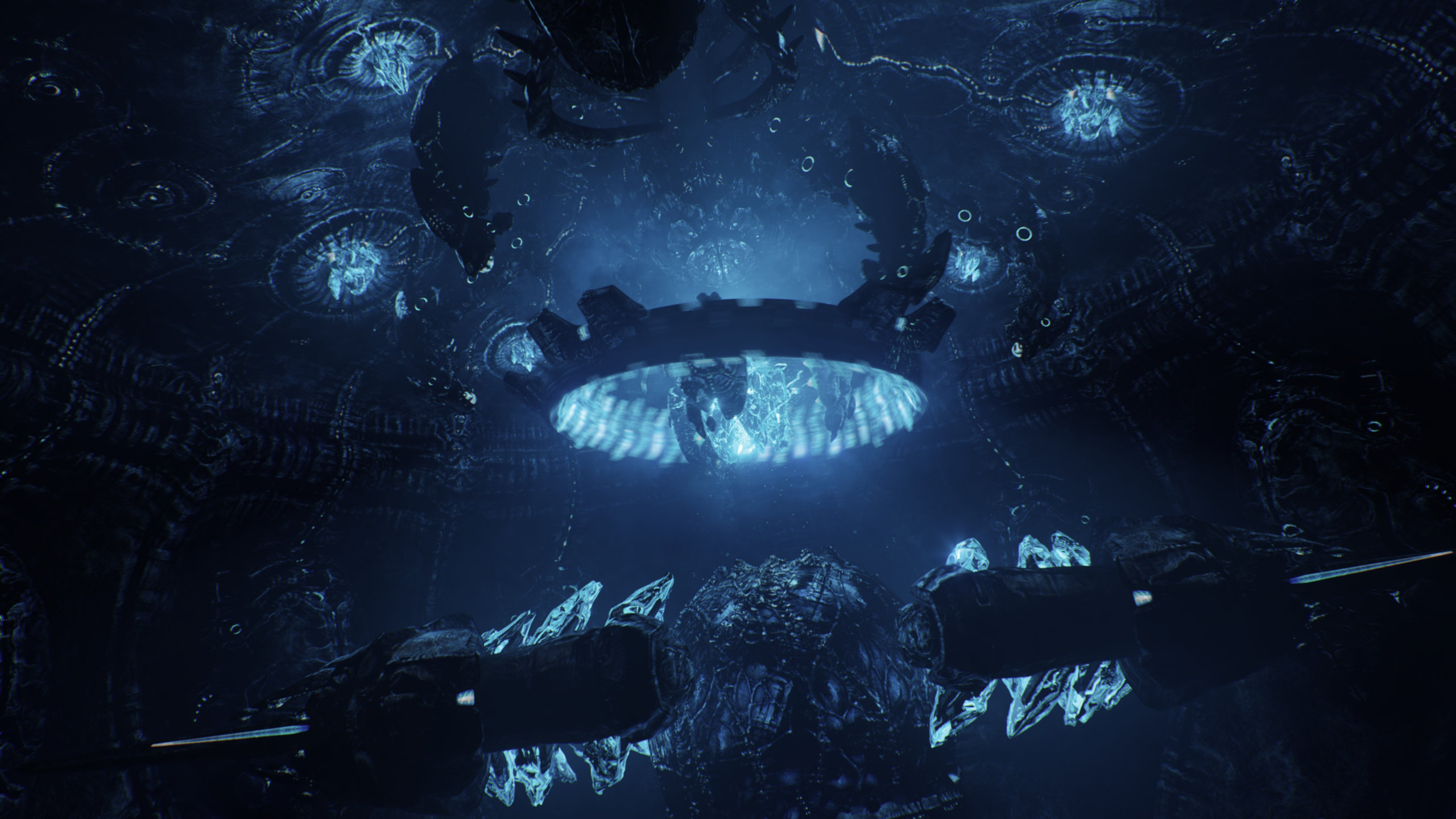
Cinematic Lead · Technical Lead · Real Time · UE5
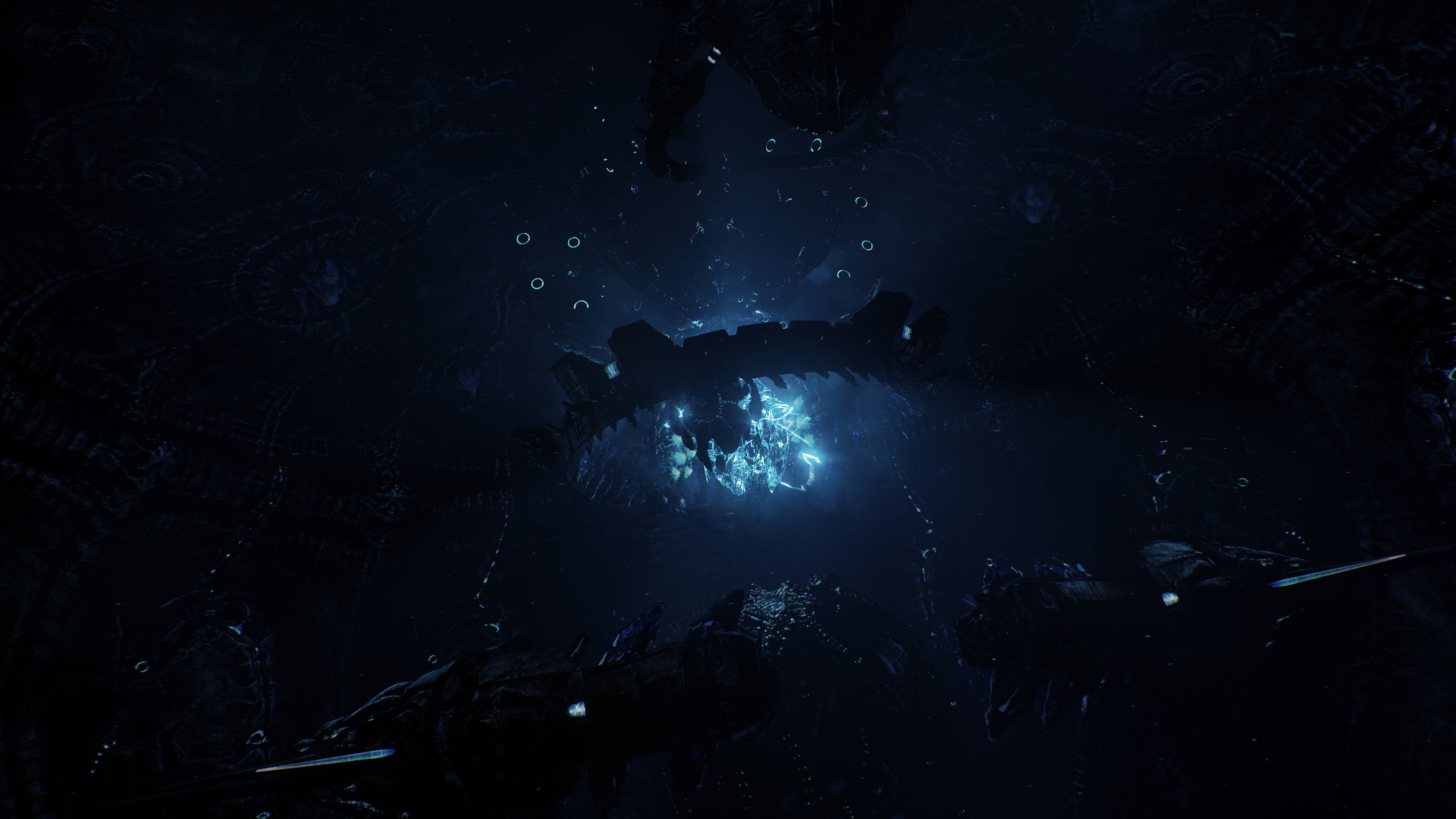
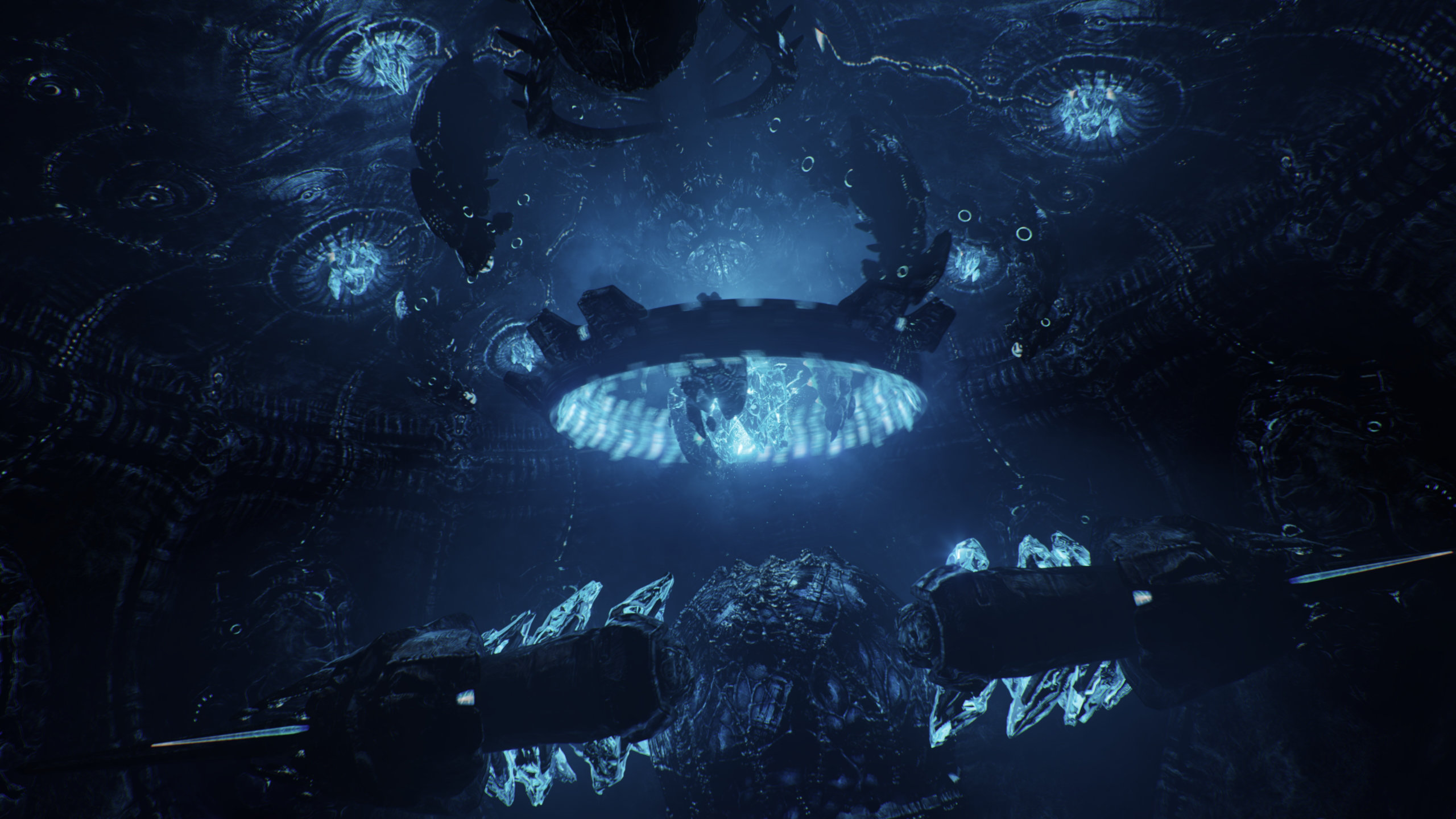
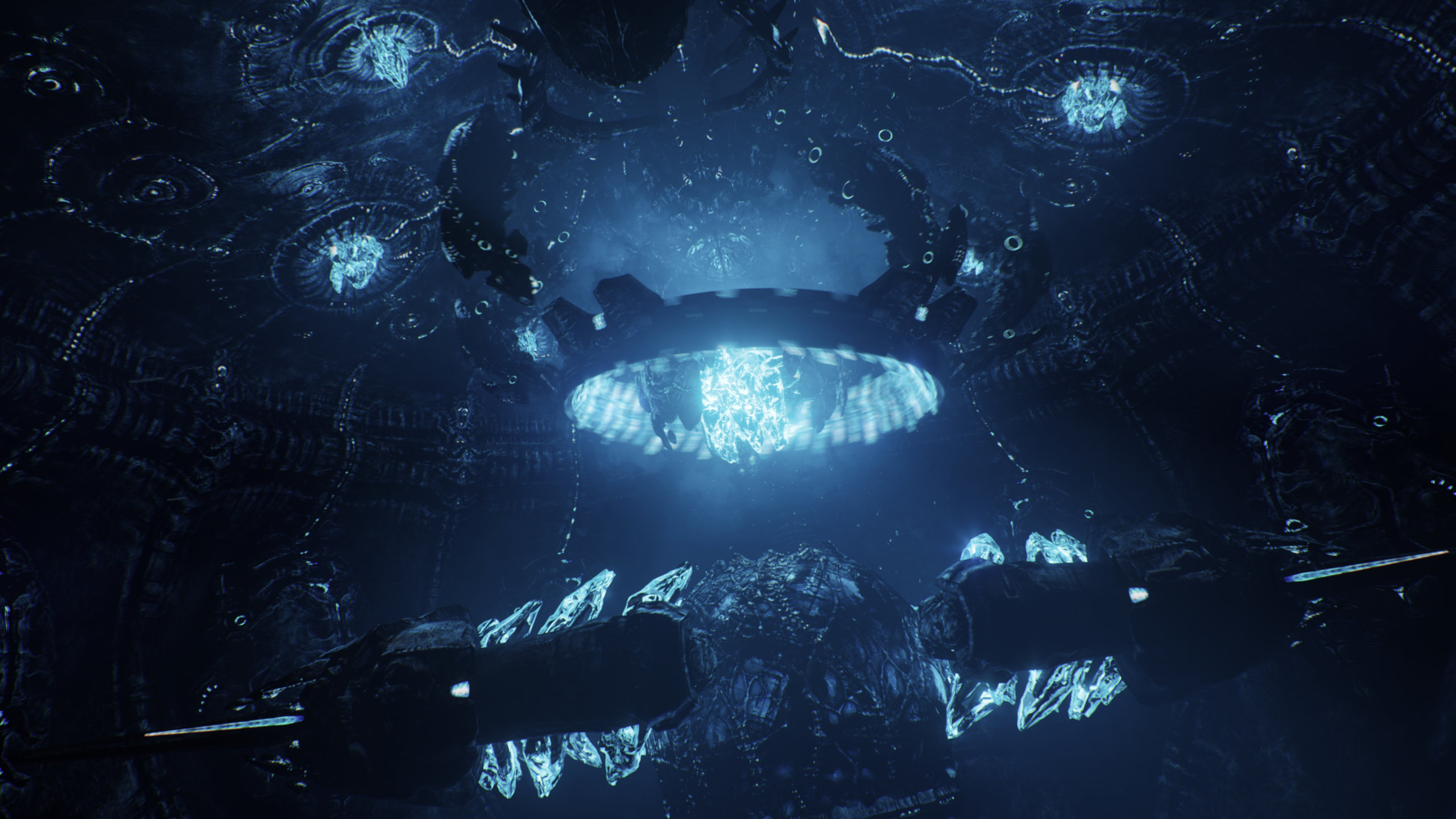
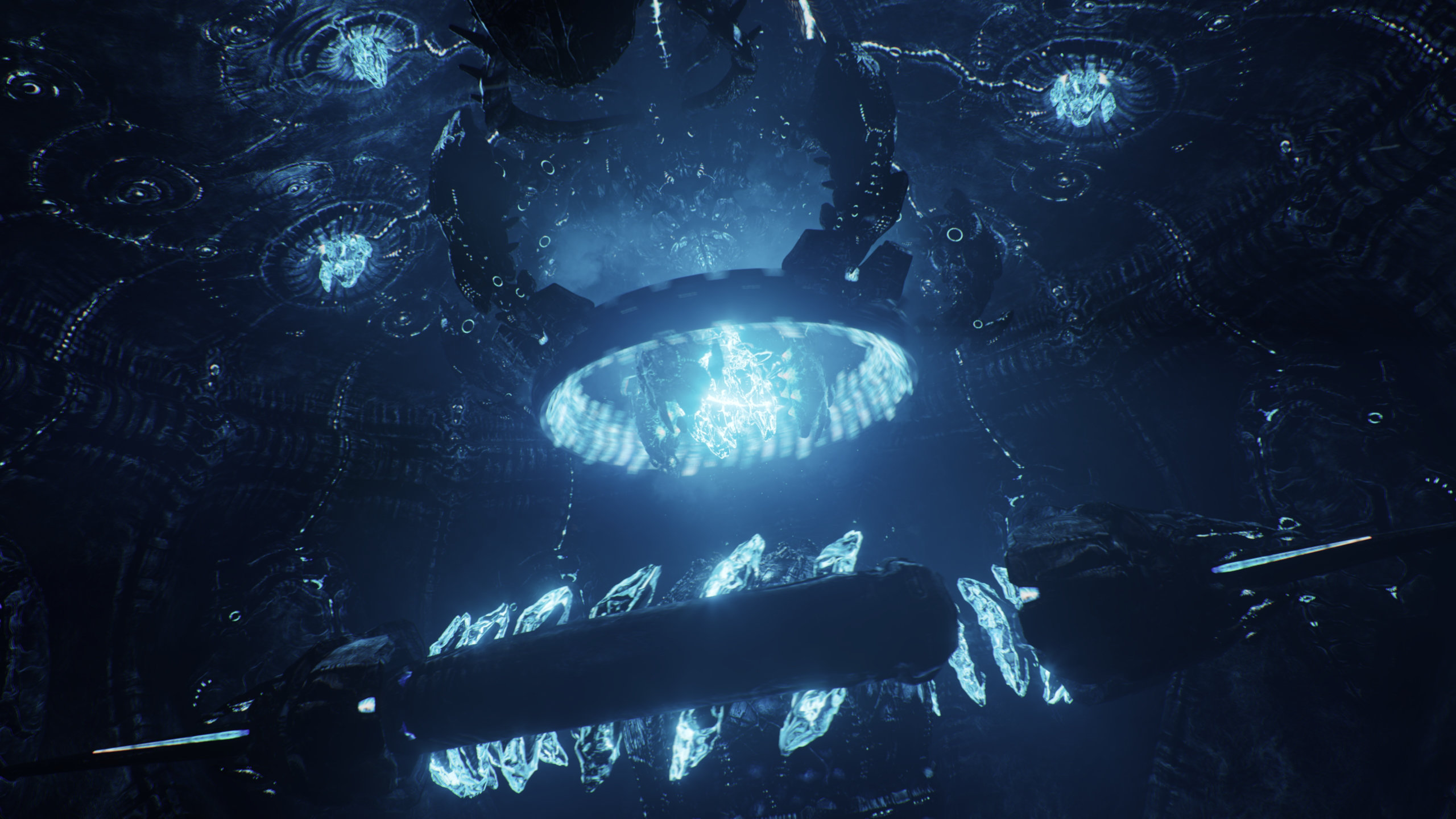
An alien chamber, entirely organic in form, no hard surfaces anywhere. Crystals and rotating dynamos fill the dark space.
As the sequence plays, the crystals grow brighter and the chamber wakes up. The dynamos spin faster and faster until support arms slam into place to stabilize the structure.
The sculpt and original animation were created earlier by other artists at the studio. My part began in 2023: assembling everything into Unreal Engine 5, then leading materials, lighting, camera, VFX, optimization, and final render with one other artist.
The scene runs fully in real time. It needed to maintain a stable framerate while moving freely through the environment, rather than being built around a single camera angle.
A breakdown of how the scene came together, from a bare mesh in engine to the final lit and animated sequence.
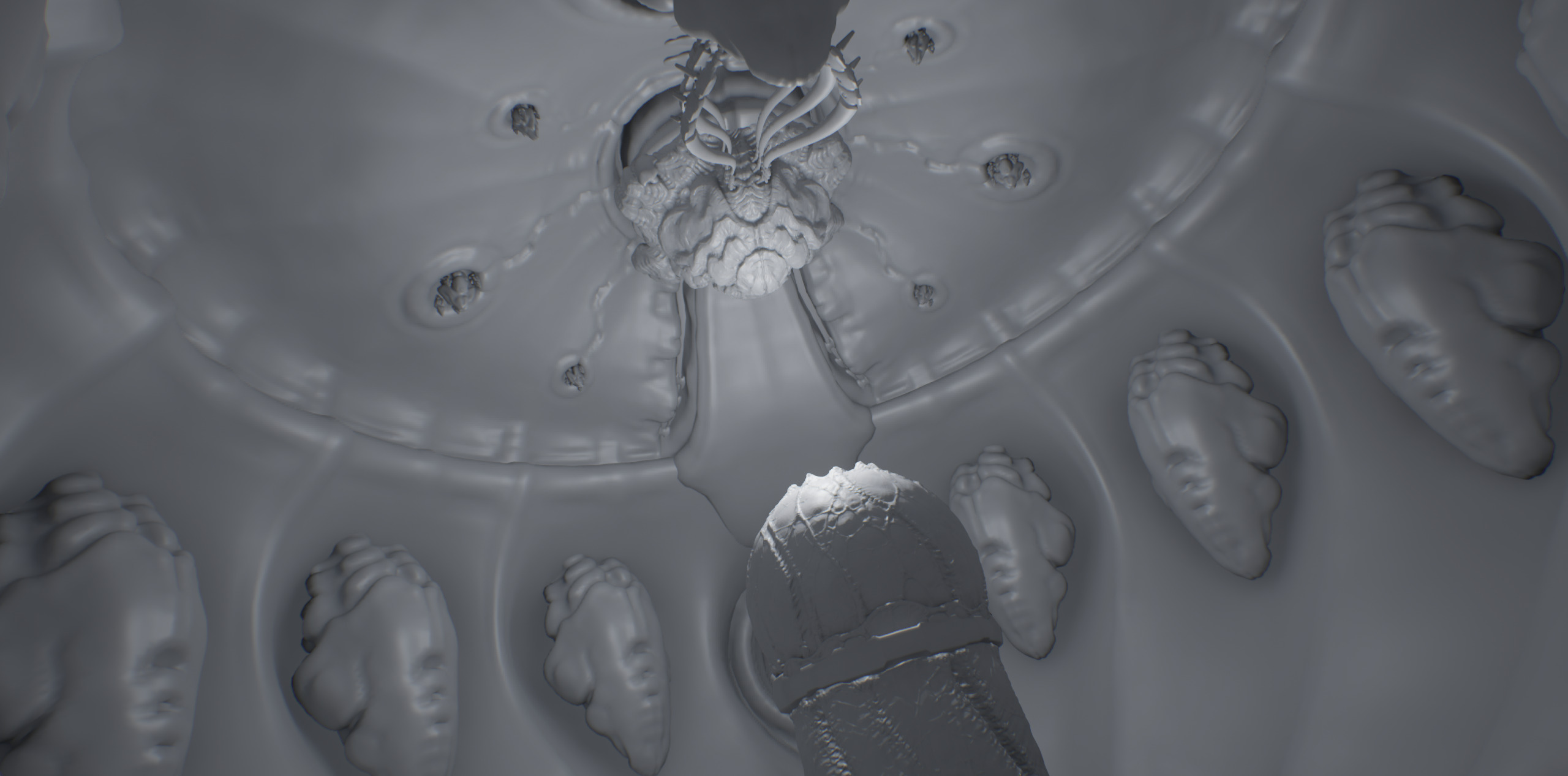
Static meshes placed in engine with a single light source, no materials yet. This first pass exists to check scale, silhouette, and how the camera would move through the space before any shading work begins.
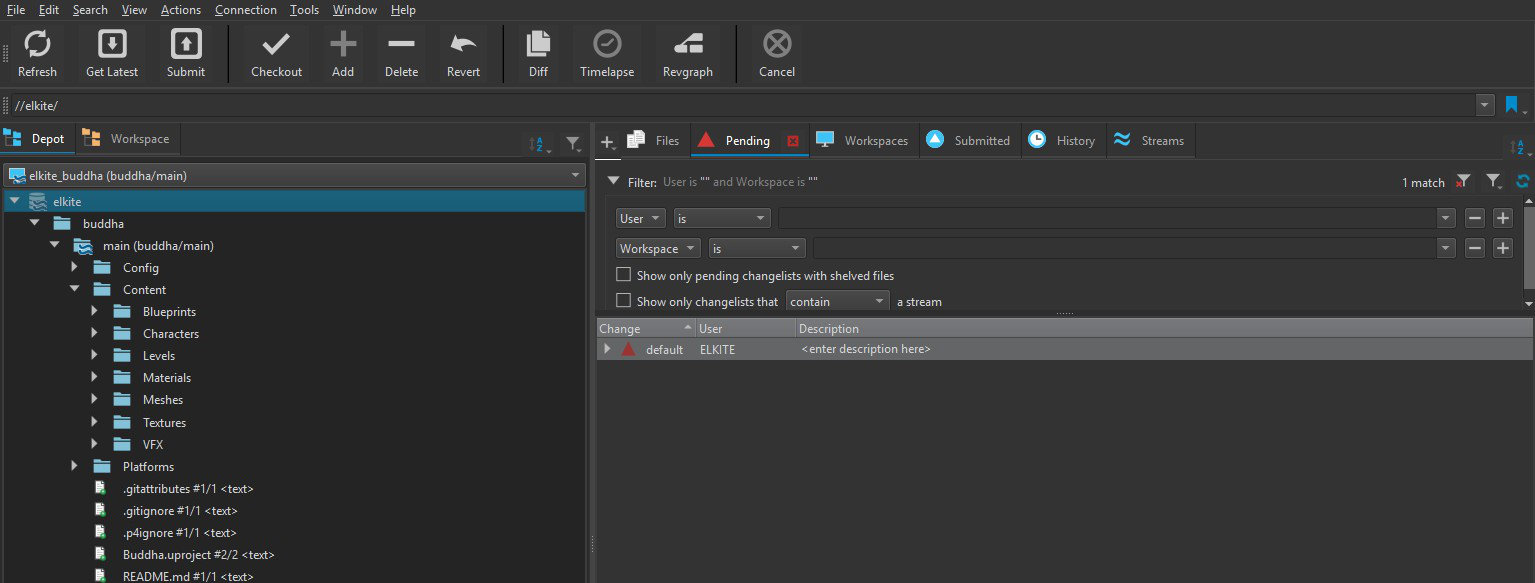
Project structured and version controlled in Perforce from the start. Clear folder hierarchy and naming kept the scene collaborative, so another artist could step in without guesswork.
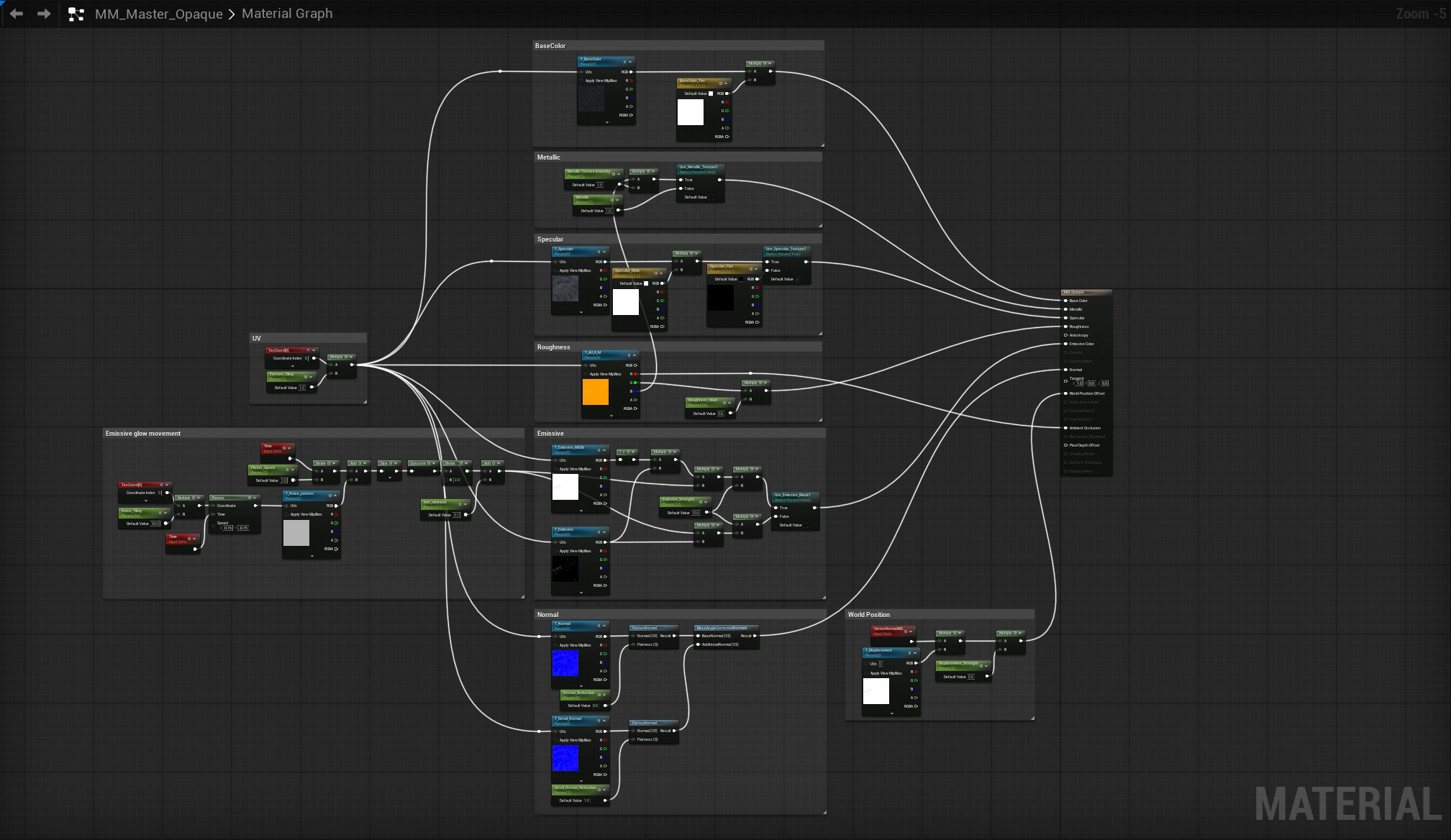
Textures arrived in a non standard packed format, so a flexible master material was built to unpack and drive them. Structured, labeled, and built to scale across every surface in the scene. The material also carries animated emissive behavior: pulses and flowing light through the crystal veins.
Parameters grouped clearly inside each material instance, so any artist on the team could adjust color, intensity, or emissive behavior without touching the graph itself.
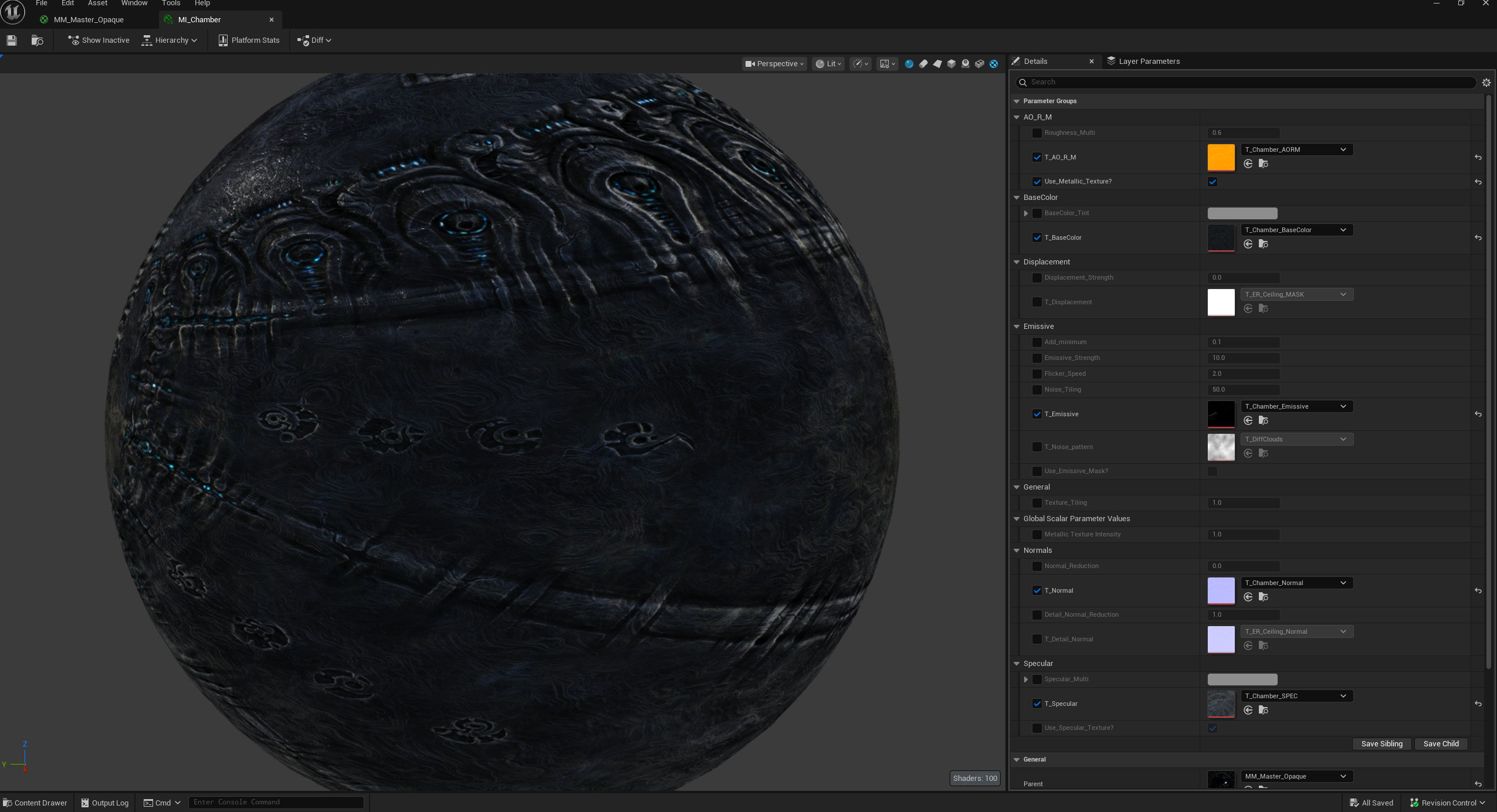
Rigged and animated meshes came in as FBX and needed adjustment on export to behave correctly inside Unreal. Once resolved, materials were applied across the full scene.
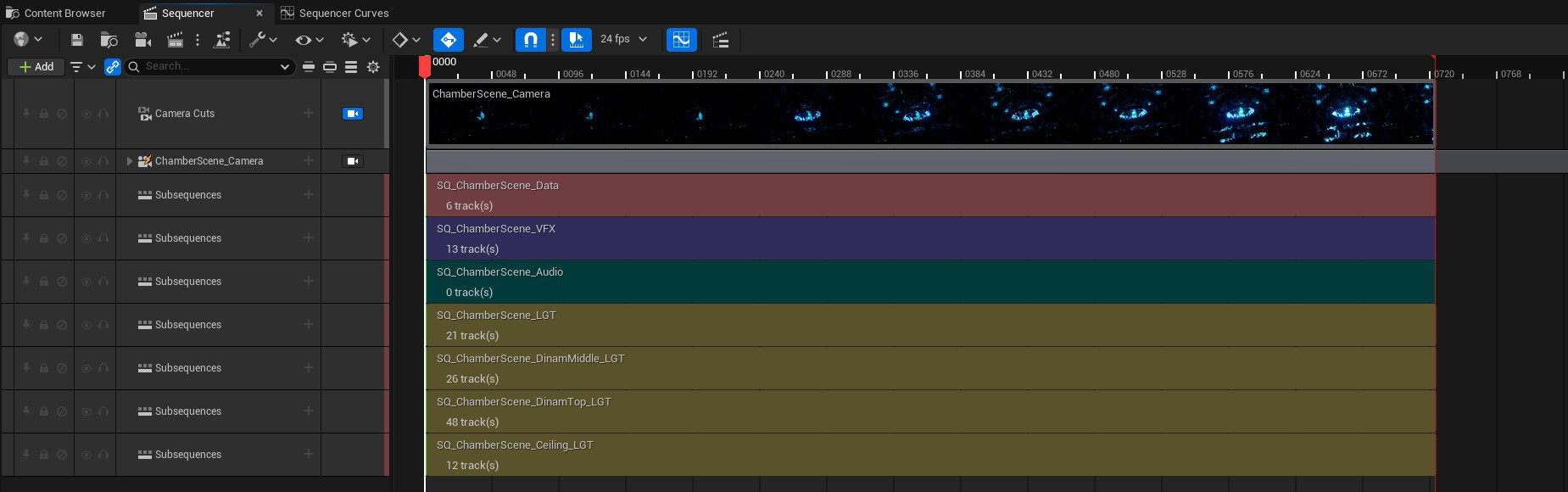
The full sequence broken into structured subsequences: data, VFX, audio, and separate lighting tracks for each moving element, the middle dynamo, the top dynamo, and the ceiling. Some subsequences carry close to fifty tracks. Kept organized so lighting, VFX, and animation could all be adjusted independently without conflict.
The first lighting pass, establishing the core mood. Cold, dark, and quiet before the sequence begins.
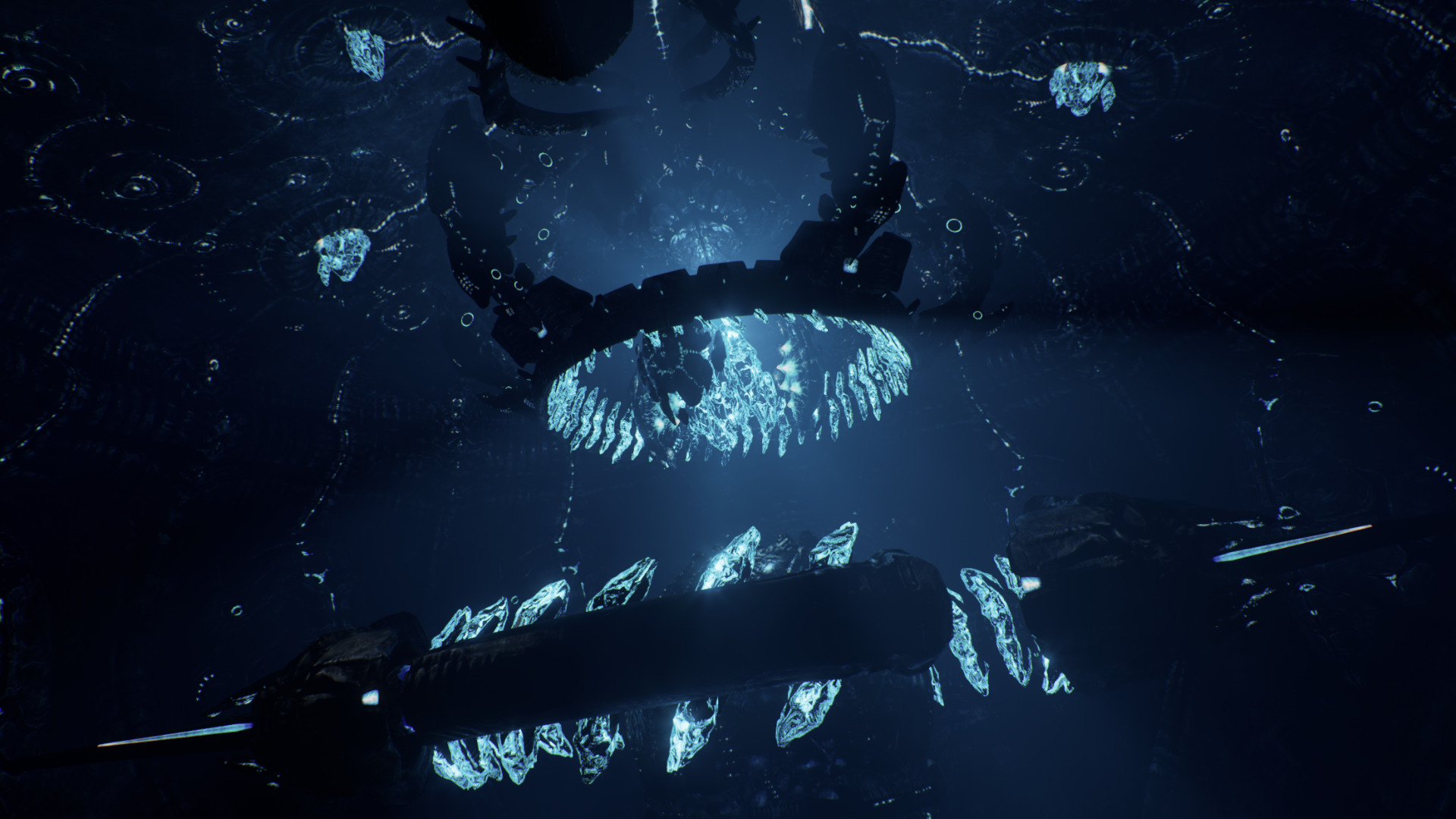
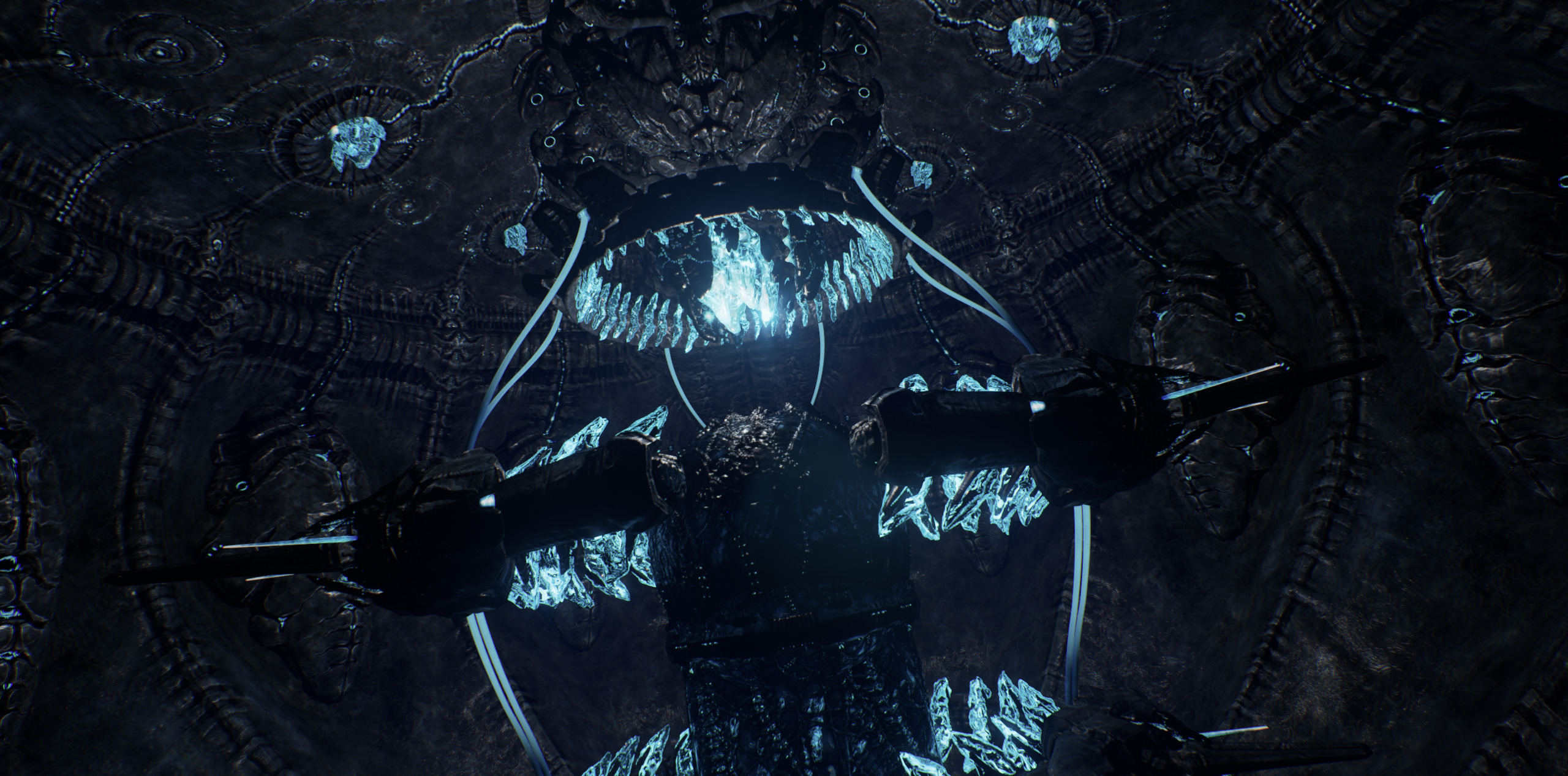
The scene shifts across a wide dynamic range: cold and dim at rest, then bright and charged with energy as the chamber wakes. Both extremes needed to read clearly while keeping the same physical space believable.
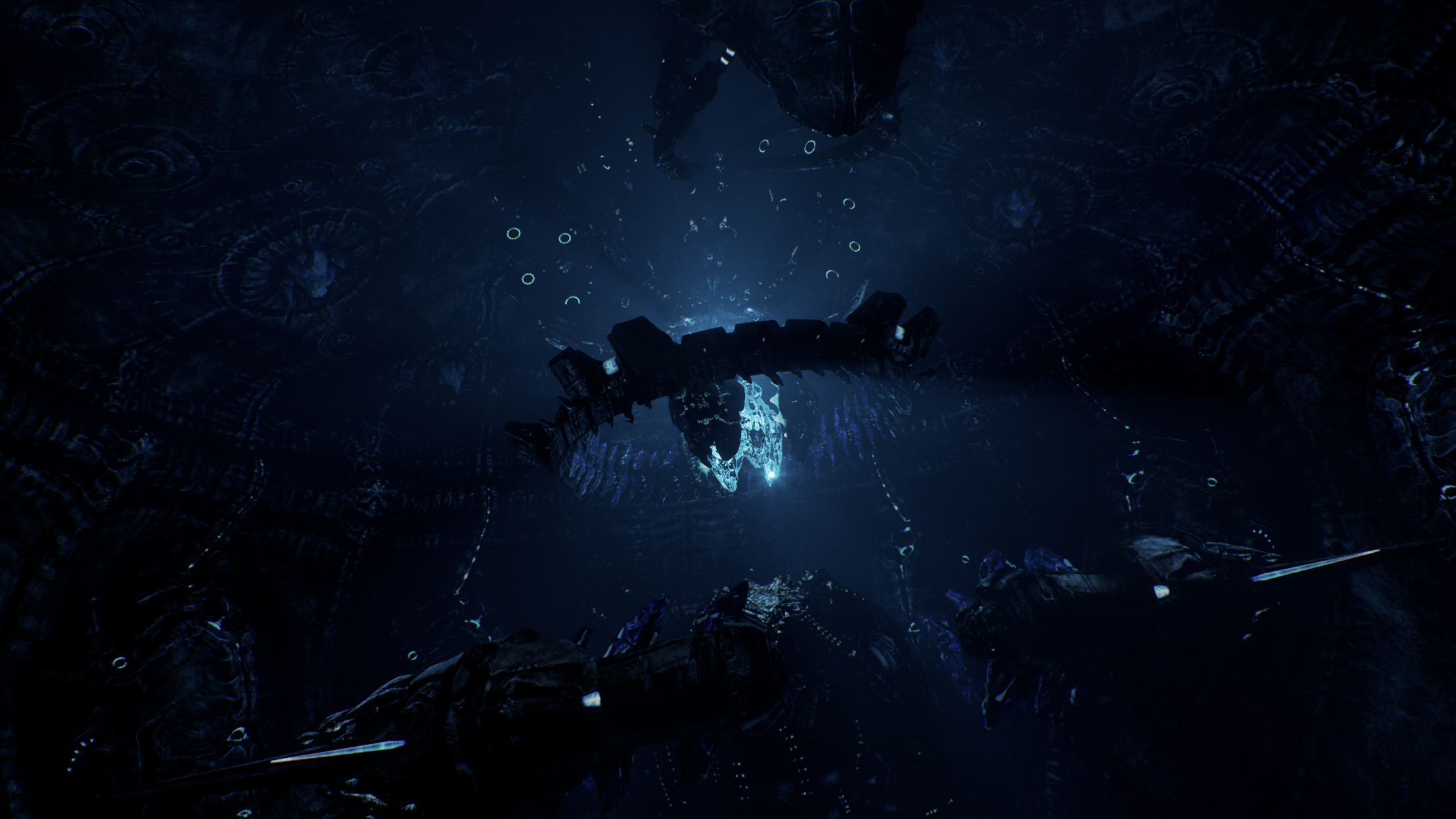
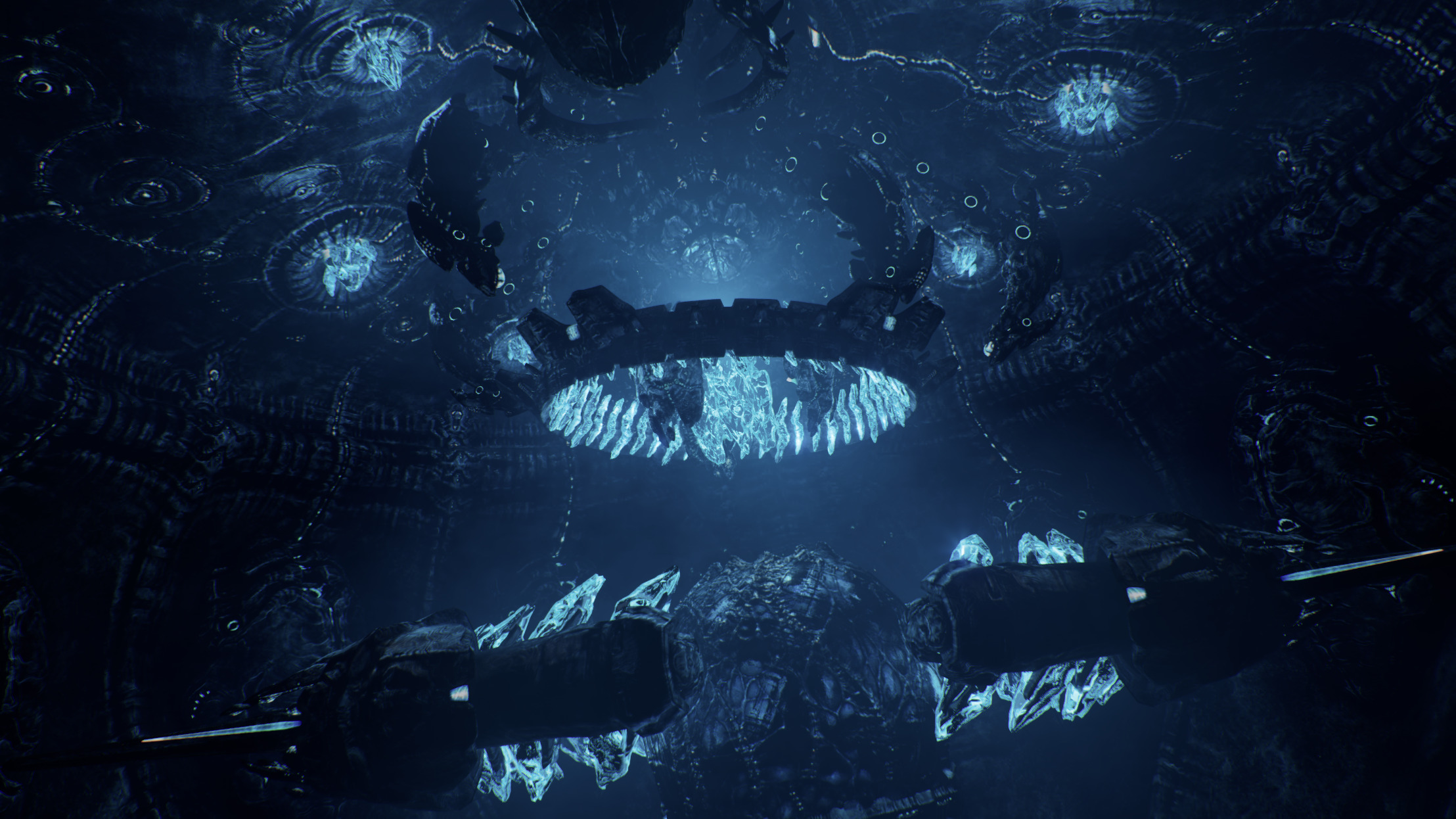
Two VFX passes layered into the scene: drifting atmospheric dust, smoke that reacts to motion and light, and increasing energy strikes across the crystal core with sparks from the dynamo impacts.
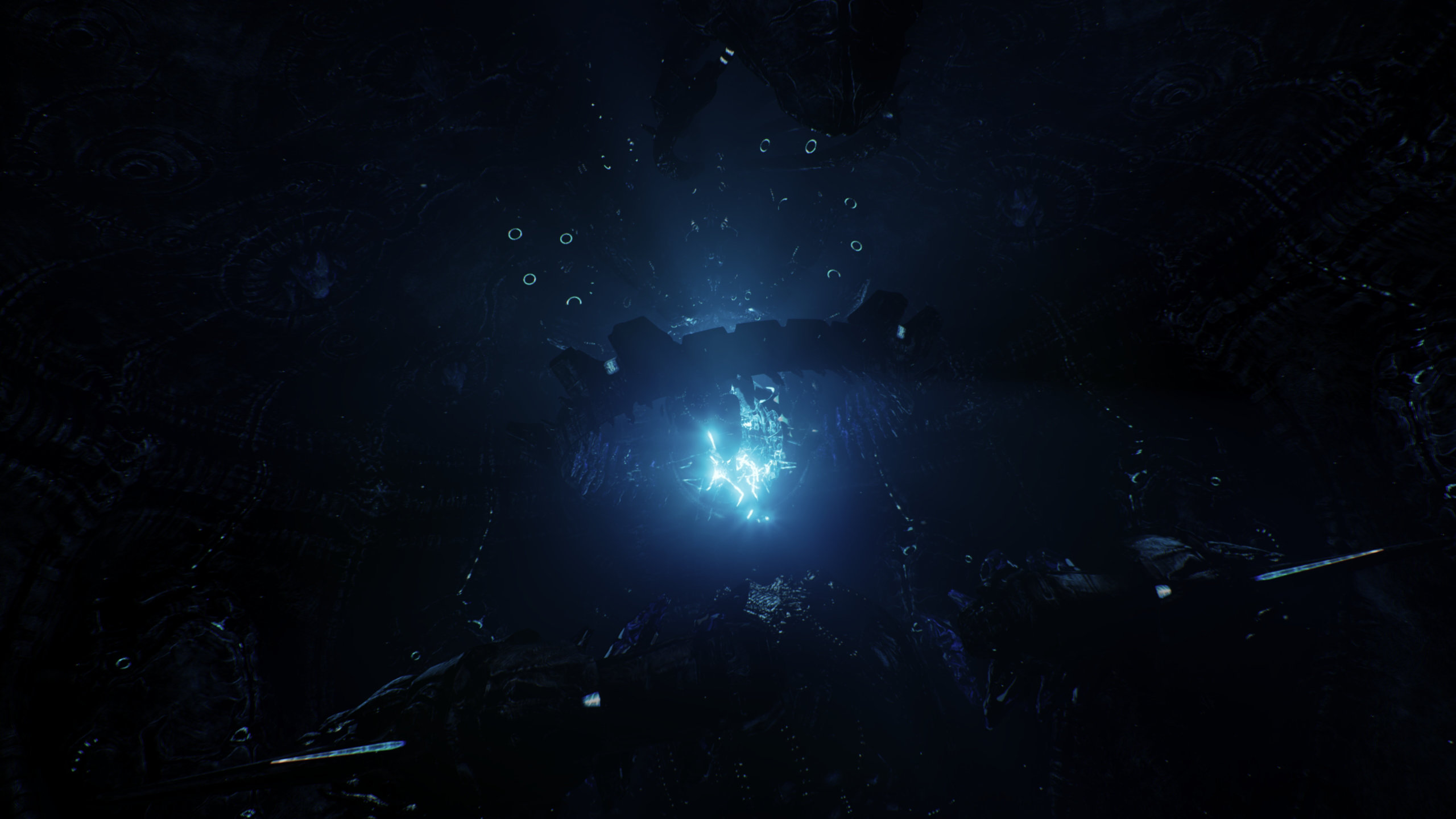
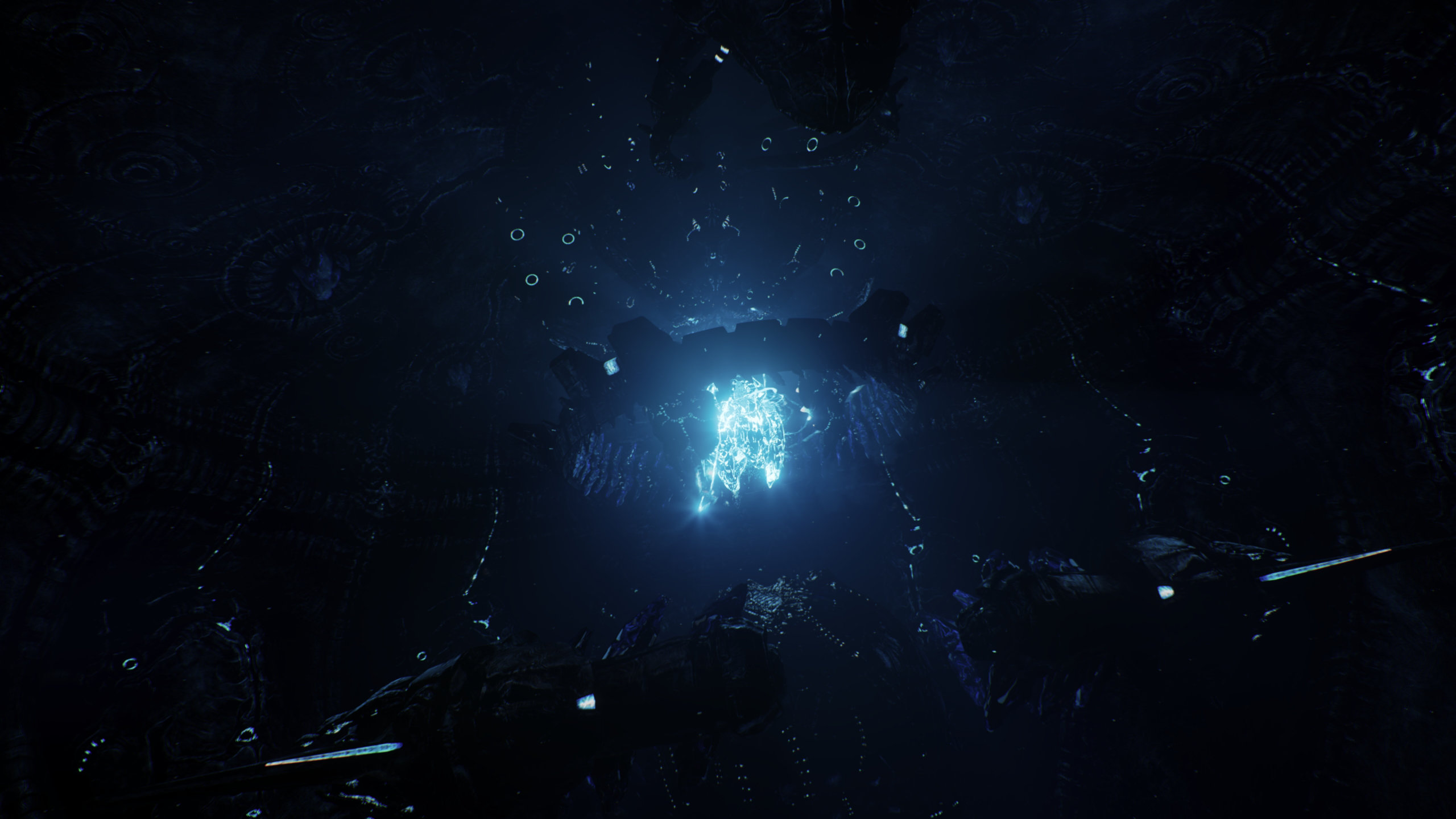
The ZBrush sculpts were extremely dense. The scene needed to run smoothly in real time without losing what made them work up close.
The environment never sits still. It shifts constantly from dark to bright across the sequence, which kept surfacing new artifacts in shadows and indirect lighting that had to be caught and fixed as the animation evolved.